

What is a Will?
A Last Will and Testament is a legal document that outlines your wishes for the distribution of your property after your death. It also allows you to name a guardian for any minor children.
Key features of a will in Texas: Takes Effect After Death: A will has no legal authority until you pass away and it is admitted to probate by a Texas court., Goes Through Probate: Probate is the court-supervised process of validating a will, paying off debts, and distributing assets to beneficiaries. This process is public., Appoints an Executor: You name an executor in your will to manage your estate, pay your final bills, and ensure your assets are distributed according to your instructions., Names Guardians: A will is the primary document used to nominate a guardian for your minor children.

When is a Will a Good Choice?
A will is a foundational element of nearly every estate plan. It’s suitable for individuals with straightforward estates who want to ensure their assets are distributed correctly and a guardian is named for their children.
Here’s an example: Beth is a single mother with one young child and a modest estate consisting of a home, a car, and a savings account. Her primary goals are to name her sister as her child’s guardian and leave all her assets to her child in the event of her death. A simple will is an effective and efficient tool to accomplish these objectives.
What is a Trust?
A trust is not a will. It’s a legal arrangement where a person (the grantor) transfers assets to a trustee, who holds and manages those assets for the benefit of a third party (the beneficiary). The most common type used in estate planning is a revocable living trust. Key features of a trust in Texas:

Takes Effect Immediately
A living trust is effective as soon as it is created and funded (assets are transferred into it). You can act as your own trustee during your lifetime.

Avoids Probate
Assets held within a trust do not have to go through the probate process. This allows for a private, faster, and often less expensive transfer of assets to your beneficiaries after your death.

Provides Control and Flexibility
A trust can include specific instructions on how and when assets are to be distributed. You can stagger distributions for young beneficiaries or protect assets from creditors.

Manages Assets During Incapacity
If you become unable to manage your own affairs, your designated successor trustee can step in and manage the trust assets for your benefit without needing court intervention.
When is a Trust a Better Option?
A trust offers more comprehensive control and is often recommended for individuals with more complex estates, those who own real estate in multiple states, or those who wish to keep their affairs private. They along with wills may need regular updating.
For Example: David and Beth own a family business, along with a primary residence in Texas, and a vacation home in Colorado. They want to ensure a seamless transition of the business to their adult children and avoid the time and expense of probate in two different states. A living trust allows them to transfer ownership of their assets, including the business and properties, into the trust. When they pass, their designated successor trustee can manage and distribute these assets privately and efficiently according to their detailed instructions, bypassing the probate courts entirely.

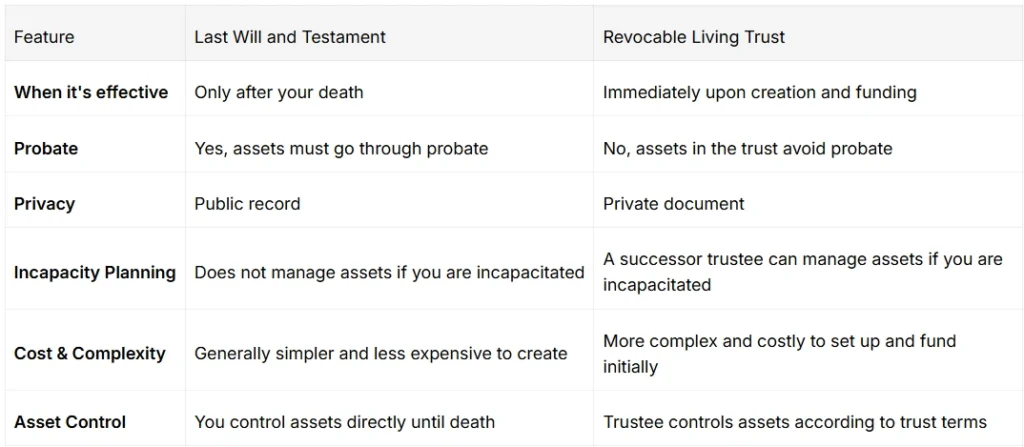
Key Differences at a Glance: Will vs. Trust
Do You Need a Will, a Trust, or Both?
Let’s Build Your Estate Plan
For many Texans, the most effective estate plan includes both a will and a trust. A “pour-over will” is often used alongside a living trust. This special type of will acts as a safety net, ensuring that any assets not properly transferred into your trust during your lifetime are “poured over” into it upon your death. A will is also necessary to name a guardian for minor children, a function a trust cannot perform. Choosing between a will and a trust depends on your unique financial situation, family dynamics, and personal goals. The best way to protect your assets and provide for your loved ones is to work with an experienced attorney who can guide you through the process.
Contact the law offices of Blizzard and Zimmerman today to schedule a case review with Sydney Key. We can help you understand your options under Texas law and create a comprehensive estate plan that gives you peace of mind.